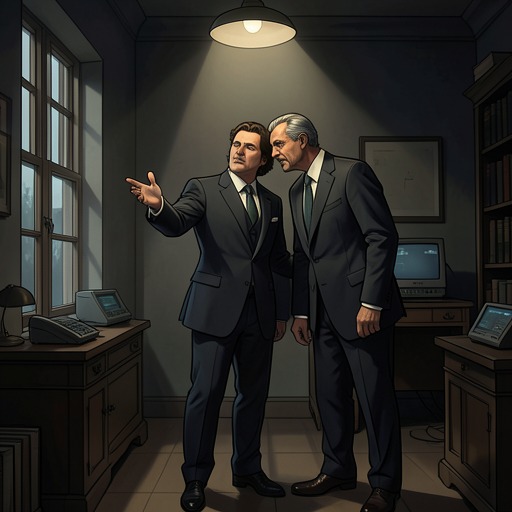
Poirot’s revelation of Alfred Inglethorp’s alibi
The Mysterious Affair at StylesHercule Poirot’s revelation of Alfred Inglethorp’s alibi turns an apparently damning purchase of strychnine into evidence of a deliberate frame-up. Alfred had been seen with Mrs. Raikes far from the village at the very time the chemist’s customer supposedly bought poison in his name; the witnesses and distance between the locations break the case against him before a wrongful arrest can take place. The disclosure also reframes Alfred’s conspicuous silence: he had kept the alibi back to prevent a rumor from being revived while Emily Inglethorp was not yet buried.
Suspicion and the apparent case
The accusation against Alfred rests on a chain of clues that seems to converge on strychnine. The accepted contention is that Emily died of strychnine poisoning, presumably from poison administered in her coffee. At the inquest, the post-mortem evidence establishes that she took at least three-quarters of a grain and probably one grain or slightly more. The medical evidence also makes the timing uncertain: strychnine usually acts within one to two hours, while the symptoms appeared in the early hours, long after the after-dinner coffee was thought to have been taken. The cocoa left in the saucepan is tested and found free of strychnine. These details leave the supposed coffee poisoning plausible enough to accuse Alfred, but not sufficient to explain the timing cleanly.
The chemist’s purchase makes the case appear more concrete. A customer said to be Alfred bought strychnine at six o’clock on Monday, and Alfred’s excuse for being away from the house that evening looks, to Poirot, obviously contrived. Yet Poirot refuses to treat the suspicious absence as proof of guilt. If Alfred knew a poisoning was planned, Poirot reasons, he would have arranged to be away; alternatively, Alfred may have had a separate reason for his absence. That distinction leaves two live explanations where a superficial reading would settle on one: apparent foreknowledge of murder, or an innocent reason concealed behind an ill-judged excuse.
The alibi and its disclosure
Poirot’s decisive intervention comes when Alfred rises to challenge his right to speak. Poirot turns to the others and identifies the supposed purchaser as someone other than Alfred. At six o’clock on Monday, Alfred had been escorting Mrs. Raikes home from a neighbouring farm. Poirot says he can produce five witnesses who saw the pair at six or shortly afterwards. Their location, Abbey Farm, is at least two and a half miles from the village, making the claimed chemist’s purchase impossible for Alfred at that time. Poirot calls the alibi unquestionable, while also offering Japp a list of the witnesses’ names and addresses so that the account can be verified rather than accepted on assertion alone.
The room’s response marks a sharp reversal in the investigation. After a moment of stupefied silence, Japp is the first to react; he congratulates Poirot and asks whether the witnesses are reliable. On being assured that they are, Japp admits that arresting Alfred would have been a serious mistake. The immediate consequence is practical as well as dramatic: the police do not arrest Alfred on the strength of the purchase, and Japp turns instead to examining Emily’s bedroom and speaking with the servants. A prosecution that seemed to be taking shape is checked by a specific, testable account of time and place.
Why Alfred withheld the truth
Japp asks why Alfred did not give this account at the inquest. Poirot supplies the explanation: there was a rumor Alfred did not want revived. Alfred confirms that he had been anxious to prevent further false rumors while Emily remained unburied. The revelation therefore does more than clear him of one act. It explains why the absence that had seemed incriminating was presented without its exculpatory context, and why Alfred allowed suspicion to gather rather than expose the circumstances of his meeting with Mrs. Raikes.
Alfred describes himself as foolish and says he had been persecuted and maligned; as he speaks, he directs a hostile glance at Evelyn Howard. The exchange connects his caution to the rumor surrounding him without establishing that the rumor was true. Japp, by contrast, insists that even rumors would have been preferable to the danger of arrest for murder, and remarks that Emily would likely have preferred the same. The scene sets private concern for reputation against the public stakes of a murder inquiry: Alfred’s silence may be understandable in the circumstances, but it nearly leaves the police with a false conclusion.
The clue becomes evidence of a frame
Before the public disclosure, Poirot has already judged the evidence against Alfred too neat. He observes that genuine evidence is often vague and unsatisfactory, whereas the case here appears cut and dried. In his view, the criminal has manufactured the evidence so carefully that it defeats its own purpose: an intangible accusation would be hard to disprove, but the tightly specified purchase gives Poirot one point at which to sever the case. The alibi supplies that point. Instead of confirming that Alfred bought the poison, the claim becomes proof that someone used his identity or appearance to make the purchase look like his.
The later reconstruction reinforces this reversal by showing how misleading the apparent evidence had been. Poirot finds that strychnine recurs in several parts of the case: in Emily’s tonic, in the poison sold by Mace in Styles St. Mary, and in another instance involving someone in the household. The repeated appearances create confusion rather than a simple trail to one culprit. In the final explanation, the strychnine that killed Emily is already present in her medicine, where it has collected as a precipitate and is taken in the last dose. The conspicuous chemist’s purchase, which seemed to identify Alfred as the poisoner, is not the murder’s real mechanism.
The explanation also gives the delay in the poisoning a role in the investigation. The murder was intended for Monday evening, when Emily’s bell wire had been cut and Cynthia was away for the night, leaving Emily isolated in the right wing. But Emily forgot to take her medicine before going to a village entertainment, then lunched away from home the next day. The fatal dose was consequently taken twenty-four hours later than intended, leaving Poirot with the final link in his chain of proof. He also produces three strips of a letter in the murderer’s handwriting, noting that a clearer warning might have allowed Emily to escape, though she recognized danger without understanding its method. Against these later discoveries, the alibi’s function is precise: it prevents an arrest founded on planted evidence and keeps the investigation open long enough for the genuine mechanism and proof to emerge.
Significance in the investigation
The alibi is both a factual correction and a lesson in how evidence can be manipulated. The five witnesses, the six-o’clock time, and the distance from Abbey Farm to the village convert an apparently incriminating detail into an alibi that can be checked. Poirot does not ask the investigators to disregard the chemist’s purchase; he changes what it means by testing it against an independent account of Alfred’s movements. The neatly packaged evidence against Alfred becomes suspect precisely because it is so conclusive on its face.
The disclosure also separates suspicion from proof. Alfred’s evasive explanation and reluctance to revive a rumor make him look culpable, while the verified whereabouts exclude him from the purchase at the crucial time. Japp’s acknowledgment that a wrongful arrest was narrowly avoided underscores the cost of treating appearance as certainty. In the wider inquiry, the episode clears the way for further investigation rather than ending it: Alfred is spared arrest, but the identity of the person who bought the strychnine and the means by which Emily was poisoned still require explanation.